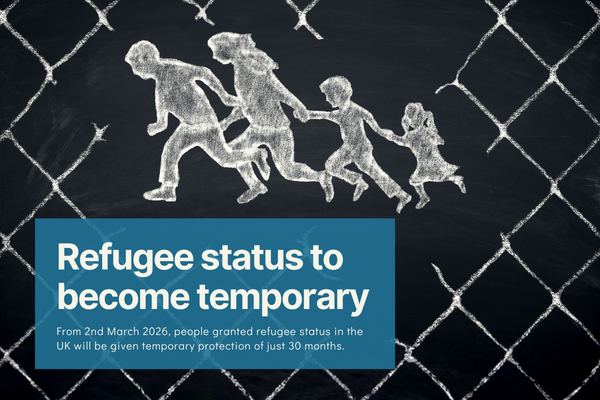
The Home Secretary has announced that from Monday 2nd March, people granted refugee status in the UK will now be given temporary protection of just 30 months.
It is understood that the changes will not be applied retrospectively, meaning that for anybody who has already submitted an asylum claim the existing rule of five years protection will still apply.
This temporary protection model, which has been inspired by a similar model in Denmark, will undoubtedly undermine integration, making it much more difficult for people to find work, put down roots and rebuild their lives here.
We are deeply concerned that this change will trap people who have fled war and persecution in a constant state of uncertainty. Facing a new kind of stress and instability, individuals will be forced to live in a state of flux: unsure if they will be able to settle here or instead face the prospect of being returned - voluntarily or forcibly - to the country from which they have fled.
We know that the Home Office has consistently struggled to process asylum claims in a timely and accurate manner. The administrative burden will only multiply with this change.
In reality, it’s likely that many people will remain in the country, even without legal status, owing to the fear of returning to their home country, and subsequently more people will be forced into destitution (which we have previously written about).
This week’s announcement, which forms part of the Asylum and returns policy statement published by the Government last November, does not require a parliamentary vote. Other proposals in the same policy statement, such as extending the period it takes for a person with refugee status to be granted indefinite leave to remain (ILR) to 20 years, will require changes in law.
Ros Holland, Chief Executive of Boaz Trust, said: “There are wars, conflicts and instability raging all over the world, and it’s surely self-evident as to why people need refugee protection. Furthermore, we know that in countries and places of conflict things do not immediately and simply resolve and often remain uncertain and complex for many years.
“It is unfair and cruel that people will be expected to live in limbo for years; never sure or safe enough to put down roots and rebuild their lives. We have long seen from our work what happens when people are forced to wait for extended periods for any kind of certainty: it erodes people’s physical and mental health, chips away at their resilience, and undermines the desire people have to integrate and belong.
“Now, more than ever, we need sensible policies that - having recognised a person’s need of protection - enable people to rebuild their lives and move forward with certainty and hope.”