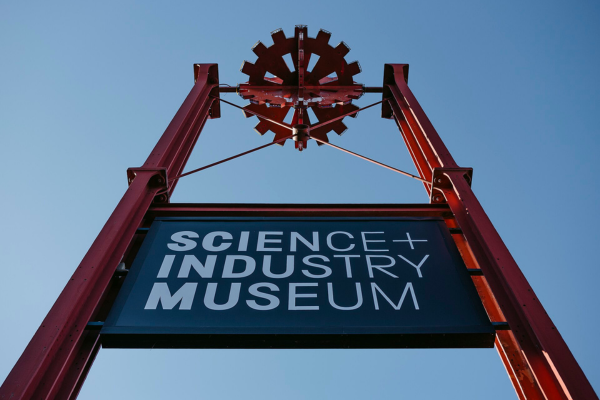
Below we're featuring a guest blog piece from one of the people we support, in which they reflect on the impact of a recent wellbeing trip to Manchester's Science and Industry Museum.
I used to spend my days talking about momentum, friction, and the laws of thermodynamics. Back then, my life had a clear script: lesson plans, ringing bells, and the lively chatter of students trying to wrap their heads around how the universe works.
Lately, though, my world looks very different. As someone navigating the UK immigration system with the support of the Boaz Trust, my days are mostly filled with waiting, uncertainty, and the quiet weight of starting over. When your entire life is put on hold, it is easy to forget who you used to be. The teacher in me felt like a past life, tucked away in a box I wasn't allowed to open.
Then the Boaz Trust arranged a group trip for us to Manchester’s Science and Industry Museum.
I didn't expect much—just a nice way to spend an afternoon, get out of the house, and share some time with others. But the moment I walked into those historic halls on Liverpool Road, something inside me woke up.
Standing in front of the massive, clanking iron of the early textile machinery, my brain instinctively shifted back into gear. I wasn't just looking at old museum pieces; I was watching physics play out in real time. I found myself mentally tracing the energy transfers, picturing the torque, and marveling at how people managed to harness raw mechanics long before modern engineering was even a blueprint.
The real magic happened when I stumbled upon the replica of the Manchester Baby, the world’s first stored-program computer, built just down the road in 1948. Looking at its messy tangle of wires and glowing valves, I felt a rush of genuine excitement. That machine is the ancestor of every screen we stare at today. It reminded me of why I fell in love with science in the first place—that restless human itch to figure things out and build something new out of thin air.
Immigration has a way of stripping away your context. It takes away your job, your title, and your routines, leaving you feeling a bit like a ghost in a strange room. But standing there, listening to the hum of engines and looking at decades of human innovation, the fog cleared a little.
Circumstances can pause a life, but they can't erase your core. I might not have a classroom right now, but the curious mind I spent decades nurturing is still very much alive.
It was more than just a museum trip. It felt like running into an old friend I hadn't seen in years: myself.